Loading Docks & Canopies
Large overhead structures can contain beams, recesses, and sheltered areas that may provide birds with protected locations above active loading areas.
Virginia Department of Wildlife Resources (DWR) permitted

Professional bird-control, bird-netting, and exclusion solutions for warehouses, loading docks, commercial buildings, and managed properties.
Commercial bird control is not always about responding after birds have already established a nesting or roosting area. Properly planned exclusion can also be incorporated as a preventative measure to keep birds from accessing favorable structural spaces.
AccuPro Wildlife Solutions provides commercial bird-control, bird-netting, and exclusion solutions for commercial facilities in Virginia. Our approach considers how birds may interact with the structure as well as how the exclusion system will interact with the building itself.
That includes evaluating rooflines, loading areas, canopies, beams, lighting, structural openings, recessed spaces, and other protected areas that can provide birds with places to land, roost, or nest.
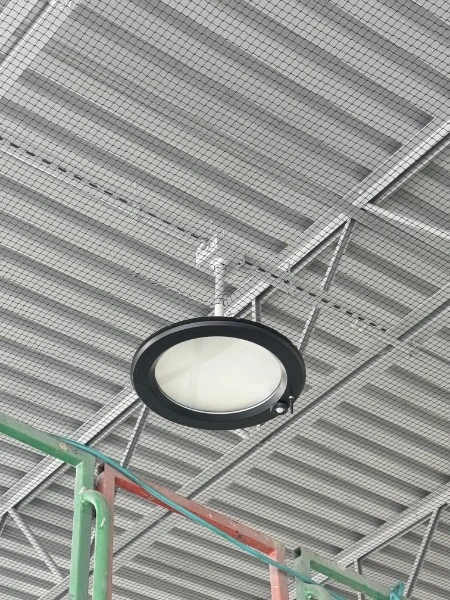
Preventative bird exclusion beneath a newly constructed loading-dock canopy at an Amazon warehouse.
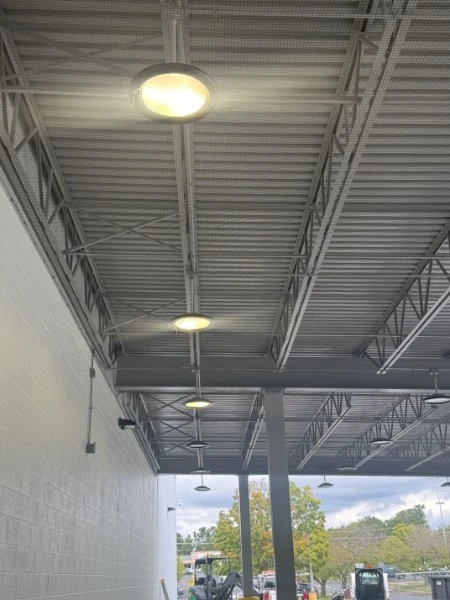
AccuPro Wildlife Solutions completed a commercial bird-exclusion project at an Amazon warehouse in Waynesboro, Virginia. The project involved a newly constructed canopy covering the facility's loading-dock area.
The work was performed as a preventative bird-control measure. Instead of waiting for birds to begin using the protected overhead structure, bird netting was installed to restrict access to the canopy area.
The completed installation covered approximately 8,250 square feet. AccuPro installed the necessary hardware along with stealth netting configured around the existing structural components of the canopy.
Because a commercial exclusion system still needs to allow future building maintenance, zippered access points were incorporated into the netting so the overhead lights can remain accessible for future service.
Commercial structures can provide protected overhead spaces, elevated resting locations, and sheltered areas that birds may repeatedly use. Effective control begins with understanding those structural conditions.
Large overhead structures can contain beams, recesses, and sheltered areas that may provide birds with protected locations above active loading areas.
Roof structures, beams, ledges, openings, and architectural features can create locations that birds repeatedly use for resting or nesting.
Recurring bird activity can lead to droppings and nesting material around loading areas, entrances, equipment, walkways, roofs, and other building surfaces.
Bird-control planning can also be incorporated into new or modified structures before birds establish recurring use of favorable areas.
Whether you're dealing with existing bird activity or planning preventative exclusion for a commercial structure, contact AccuPro Wildlife Solutions to discuss the property and the areas that need to be protected.
Evaluate the building and the structural areas associated with existing or potential bird activity.
Physical exclusion solutions designed around the configuration of the commercial structure.
Bird-exclusion planning can be used to restrict access before birds establish recurring use of a suitable area.
Commercial netting layouts can account for building features that require continued access, such as lighting.
Tell us about your facility and the bird-control or exclusion project you're considering.
The appropriate bird-control strategy depends on the structure, the areas birds can access, how the building is used, and whether the project involves existing activity or preventative exclusion.
Bird-control planning starts with the building. Rooflines, canopies, beams, ledges, signs, openings, equipment, lighting, and recessed areas can all affect how birds interact with a commercial property.
Existing roosting or nesting locations can help identify where control is needed. On preventative projects, the same type of evaluation can identify structural areas that should be made inaccessible before bird activity becomes established.
Netting and other physical exclusion measures have to work with the structure. Supports, lights, walls, equipment, access points, and other building features can affect the layout of the system.
Exclusion should not ignore future maintenance needs. On the Waynesboro warehouse project, zippered openings were installed to provide future access to lights above the netting.
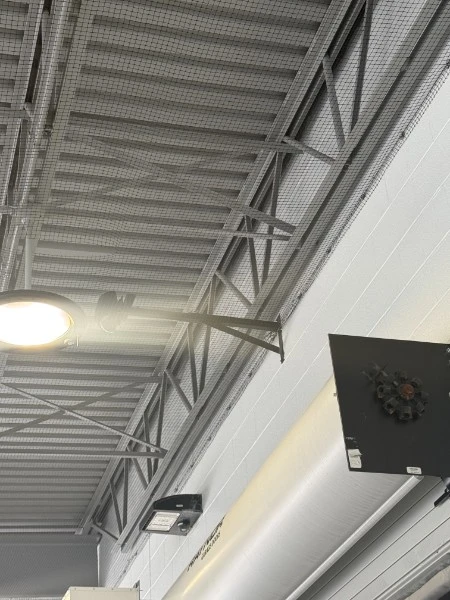
Bird netting is a physical exclusion method used to restrict birds from entering designated structural areas. It can be particularly useful where a large overhead space contains numerous potential resting or nesting locations.
The Waynesboro project demonstrates how netting can be integrated across a substantial commercial structure. Approximately 8,250 square feet of space beneath the new loading-dock canopy was protected with stealth netting and the associated installation hardware.
Rather than treating lights, beams, and other structural components as an afterthought, those features need to be considered when planning the netting layout.
Discuss Your Commercial ProjectProtecting an overhead structure is only one part of a commercial bird-netting installation. Building systems above the netting may still need to remain accessible.
On the Waynesboro warehouse project, overhead lights were located within the protected canopy area. AccuPro incorporated zippered access points into the stealth netting to allow future access to those lights.
This type of planning is important on commercial properties because an exclusion system becomes part of an active building. Lighting, equipment, utilities, and other serviceable components should be considered when determining how the system is laid out.
Stealth bird netting, installation hardware, and zippered maintenance access were incorporated into the Waynesboro commercial project.
Bird pressure and building design differ from property to property. The structure and intended use of the space should be considered before selecting an exclusion approach.
Commercial structures can contain many features birds may use: elevated resting locations, sheltered beams, recessed areas, roof structures, signs, equipment, canopies, and relatively undisturbed overhead spaces.
Existing bird activity can reveal which parts of a building are being used. Preventative projects require looking at the structure differently—identifying potentially favorable areas before birds begin regularly using them.
The Waynesboro loading-dock project is an example of preventative planning. The newly constructed canopy created a large protected overhead area, and the exclusion system was installed to keep birds out of that space.
The project also demonstrates why the building itself has to remain central to the plan. The netting needed to cover thousands of square feet while working around the canopy structure and maintaining access to overhead lighting.
AccuPro Wildlife Solutions provides commercial bird-control and exclusion services for Richmond-area properties and can discuss commercial projects in other Virginia locations.
Common questions about commercial bird exclusion, bird netting, preventative control, and large commercial applications.
Yes. Bird exclusion can be used preventatively when a structure contains areas that need to be protected from future bird access. AccuPro's Waynesboro warehouse project involved preventative netting beneath a newly constructed loading-dock canopy rather than waiting for birds to establish use of the overhead area.
Bird netting is a physical exclusion system used to restrict birds from entering or occupying designated areas. The layout and installation depend on the structure, the area requiring protection, and the building features located within that area.
Bird netting can be appropriate for certain loading-dock and canopy applications. AccuPro installed approximately 8,250 square feet of stealth netting beneath a newly constructed loading-dock canopy at a warehouse in Waynesboro, Virginia. Each property should be evaluated based on its construction and the area that needs to be protected.
Maintenance requirements should be considered during the planning process. On AccuPro's Waynesboro project, zippered access points were installed in the netting so overhead lights can be reached for future service.
Commercial buildings can provide elevated resting areas, sheltered nesting locations, structural openings, beams, canopies, and other protected spaces. Nearby food and water sources can also contribute to activity. Identifying why birds favor a particular area is an important part of developing an appropriate control strategy.
The appropriate approach depends on factors such as the construction of the building, where birds are landing, roosting, nesting, or gaining access, how the property is used, and whether the goal is corrective or preventative. These factors should be considered before a specific exclusion method is recommended.
AccuPro Wildlife Solutions has completed commercial exclusion work involving large overhead spaces. One example is the approximately 8,250-square-foot stealth-netting installation beneath a warehouse loading-dock canopy in Waynesboro, Virginia. Contact our team with information about your facility so the project can be discussed.
Contact AccuPro to discuss bird exclusion, commercial netting, or bird activity at your property.